Author: Leslie Francis

#FrancisOnFilm: Judas and the Black Messiah

Judas and the Black Messiah tells the story of the FBI murder of Black Panther Fred Hampton, aided by informant William O’Neal. The film bears its theme in the title: betrayal. But what exactly is betrayal? And what is its relation to trust, loyalty, and promises?

#FrancisOnFilm: The Mole Agent

The Mole Agent is a charming documentary about a private investigator hired to find out whether elder abuse is happening at a nursing home in Chile. At the heart of the film is a deception, which raises questions about trust beyond the question whether lies can ever be justified by good intentions.

Torn face mask held by two hands, symbolizing the accessibility debate in the arts.

Covid and the Veil of Ignorance

As I’ve struggled to find a film to write about, I thought I’d write about a feature of Covid that is particularly philosophically relevant: you can be infected but be asymptomatic. So you must make decisions under uncertainty, not knowing whether you are sick or contagious—victim or vector.

#FrancisOnFilm: Crip Camp

Are you eager for quarantine to be over but apprehensive about what the future might bring? For a dose of optimism, reflections on freedom, and a very good film, check out Crip Camp: a Disability Revolution. I was lucky to see it at this year’s Sundance Film Festival, where it won the Audience Award.

#FrancisOnFilm: Portrait of a Lady on Fire

Is it wrong to paint someone’s portrait without their consent? Portrait of a Lady on Fire presents this ethical dilemma for an eighteenth century portrait artist. The film is deep on many levels, but one of the most important is how it asks us to think about portraiture, privacy, and consent.

Close-up of several golden Oscar statuettes.

#FrancisOnFilm: Dionysus for Docs

A documentary film has never won the Philosophy Talk Dionysus Award for Most Philosophical Film of the Year. But documentaries often raise complex philosophical issues and get us to question our assumptions. This year’s Oscar nominees for Best Documentary are no exception.

#Francis-on-Film: Parasite

Parasite, the new critically-acclaimed film by the South Korean director Bong Joon-ho, challenges audiences to probe social parasitism amidst growing inequality in a largely affluent country. Who exactly are the parasites? And what makes them parasites?

#FrancisOnFilm: Once Upon a Time…

Quentin Tarantino’s new film, Once Upon a Time… in Hollywood, retells the story of the murders committed by members of the Manson “family.” In the film, one of the cult killers says to her victims: “You taught me to kill. Shouldn’t I kill you?” This question is pointedly directed to members of the audience too.

#FrancisOnFilm: Last Black Man in SF

The Last Black Man in San Francisco was my favorite film at Sundance this year. It explores critical questions about whether respect for persons requires addressing erosion of the conditions on which identity claims rest—erosion that so clearly has been and is continuing to occur for some communities in San Francisco.

#FrancisOnFilm: I Am Mother

Sci-fi thriller I Am Mother is due out on Netflix tomorrow. It’s a fantastic philosophical movie that raises all kinds of philosophical questions about abortion, reproduction, enhancement, population policy, and especially about what it means to be a good mother.

#FrancisOnFilm: Shazam!

Shazam!, the latest in the DC comics superhero series, may be viewed as a delightful feel-good movie. But some of what its audience might take away from the movie are bad messages about justice that mirror the problems with John Rawls’ idealized theory of justice.

#FrancisOnFilm: Minding the Gap

What are friends for? Should friends be supportive and non-judgmental? Should they attempt to improve one another? Or should friendship wane with the recognition that the friend has harmed another? Minding the Gap suggests that these questions do not have simple “yes” or “no” answers.

#FrancisOnFilm: Aquaman

Can an action flick like Aquaman be philosophically interesting? Could it, for example, contribute to environmental preservation by actually motivating people to do something about oceanic pollution? Answering this question requires theorizing about moral motivation.

#FrancisOnFilm: Brexit

Do makers of films that fictionalize real events have obligations not to misrepresent in the interests of telling a good story, particularly when they aim to make a political point? Is it permissible to fill gaps in a story with fictionalized accounts of events?

#FrancisOnFilm: Mission Impossible

Mission Impossible: Fallout is an intensely escapist movie, but it’s also a deeply philosophical one. It explores the question: should you be the kind of person who saves his friends and risks millions of lives, or the kind of person for whom saving the millions matters to the exclusion of all else?

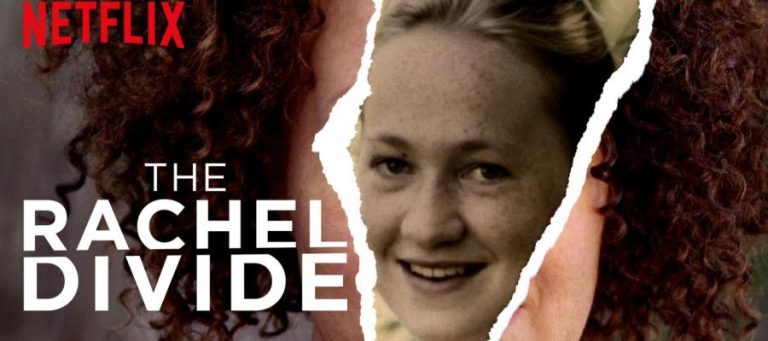
Split image of a young woman, past and present, for Netflix's "The Rachel Divide".

#FrancisOnFilm: The Rachel Divide

The Rachel Divide, a documentary about Rachel Dolezal and the controversy over her claims to racial identity, came out in April on Netflix. The movie would have benefited, however, from some philosophical consideration of what race is—or is not—and what claims to racial identity assert.