
Philosophy In, Of, and About Mexico
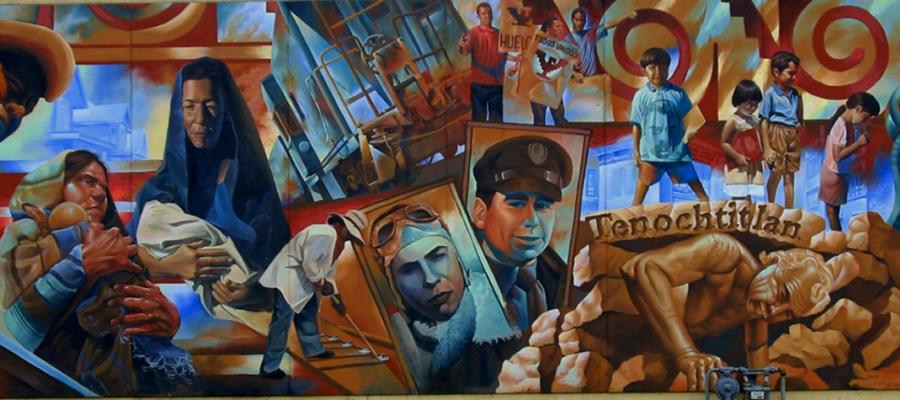
There are so many great ideas in the realm of Mexican philosophy: Sor Juana’s feminism, Emilio Uranga’s existentialism, all that fascinating stuff from the Aztecs and Mayans. But it’s worth asking why we lump all those things together.
Mexican philosophy is full of fascinating ideas, from Mexica (“Aztec”) and Mayan thought to Sor Juana’s feminism and Emilio Uranga’s existentialism. But is “Mexican philosophy” a single thing? Do all those branches have anything significant in common, other than coming from (roughly) the same part of the world?
Arguably, the answer is yes. After all, we talk about “Greek philosophy,” “German philosophy,” and even—god help us—”French philosophy.” So there seems to be no reason not to talk, in a similar way, about Mexican philosophy: it’s no more or less variegated than, say, a body of thought that includes Plato, Gorgias, Diogenes, and Posidonius. What’s more, Mexican philosophy is a tradition. These voices are often in conversation with each other, and they are frequently talking about a single central topic: freedom.
One famous example is Bartolomé de las Casasa 16th-century priest (originally from Spain) who railed against the barbarity of the European invasion. In Las Casas’s time, Spanish colonists were enslaving the Indigenous inhabitants of the lands they had invaded; Las Casas vigorously opposed this, drawing—fascinatingly enough—on Aristotle. It might seem counterintuitive (to say the least!) to draw on Aristotle for opposition to slavery, since Aristotle claims some people are “slaves by nature.” But Aristotle also saiys it’s wrong to force rational beings to do things; you can attempt to persuade them, but you can’t coerce them. Since this obviously applied to Indigenous people in the Americas, Las Casas had an excellent case. And although Las Casas did not prevent all of the abuses, he got his colonial contemporaries thinking seriously about the rights of Native people.
The tradition of philosophizing about freedom just kept on going. In the early 19th century, for example, Miguel Hidalgo, leader of the War of Independence, used Enlightenment ideas to argue for Mexican autonomy. Hidalgo didn’t end up getting separation of church and state written into the constitution, but the revolution did at least abolish the monarchy and protect the freedom of the press. And shortly after that, in 1829, Mexico outlawed slavery.
Nor did Mexican philosophers stop there. In the 20th century, Mexican existentialists like Emilio Uranga called for an even more radical freedom—the freedom for each individual to choose their life. Uranga also flipped the Eurocentric script on its head: Europeans are always criticizing Mexican thinkers, he said, for being full of resentment, melancholy, and angst. But these things help us understand our fundamental existential predicament, and so make us more human. So Europeans should be more like Mexicans, not the other way round.
Mexico also had advocates for women’s freedom, like writer and poet Rosario Castellanos, one of whose characters says “it’s not good enough to imitate others. It isn’t even enough to discover who we are. We have to invent ourselves.”
In short, the whole tradition really does feel like a single conversation, stretching all the way across the centuries. It’s wide-ranging, and endlessly insightful, but at its core, arguably, it is a conversation about freedom. We can’t wait to hear more about it from our guest: Manuel Vargas, co-director of the Mexican Philosophy Lab at UC San Diego and author of the forthcoming book, Mexican Philosophy.