James Baldwin and Social Justice

August 4, 2024

First Aired: February 11, 2018

Listen

LOGIN or Subscribe TO LISTEN

Sometimes, we struggle to tell the truth—especially when it’s the truth about ourselves. Why did James Baldwin, a prominent Civil Rights-era intellectual and novelist, believe that telling the truth about ourselves is not only difficult but can also be dangerous? How can truth deeply unsettle our assumptions about ourselves and our relations to others? And why did Baldwin think that this abstract concept of truth could play a concrete role in social justice? The Philosophers seek their own truth with Christopher Freeburg from the University of Illinois, author of Counterlife: Slavery after Resistance and Social Death.

Debra and Ken open the show with a discussion of James Baldwin’s call for love as a solution to racial injustice. Debra is skeptical of this since it would require that the oppressed love their oppressor. Ken responds in terms of Baldwin’s notion of white innocence – the illusion of the oppressor being in the right – and further argues that love does not let white people off the hook but instead transforms their oppressive worldview.

The hosts are joined by guest Christopher Freeburg, Conrad Humanities Scholar and professor of English at the University of Illinois. On the topic of Baldwin’s call for love, Christopher argues that blacks and whites love each other as a form of mutual recognition of each other’s humanity. For Baldwin, white oppressors are caught in the trap of history: a false sense of reality that black people are inferior and a feeling of disconnection from black people which can only be disentangled by love. White people ultimately have to confront the moral reality of why they maintain oppression, which puts the onus on both whites and blacks to love one another.

In the final segment of the show, Debra, Ken, and Christopher discuss what Baldwin would think of today’s social justice movements. Christopher describes the current Black Lives Matter movement and its commitment to recognizing vulnerability as a movement that Baldwin would support. Debra wonders how institutional change may result from this movement, and Christopher reiterates that acts of love are necessary for society to reconstitute itself post-oppression by changing institutions through the people who live under them. This introspective project, in which human beings have to confront themselves in the face of history, may usher a change of the heart which is prior to changing the world.

Roving Philosophical Report (Seek to 6:20): Holly J. McDede provides a report on the resurgence of Baldwin’s work in popular culture. Notably, the documentary I Am Not Your Negro (2016) brought Baldwin’s literary and philosophic work back to the spotlight. Moreover, Holly interviews a variety of contemporary writers and academics who are applying Baldwin’s work to current social movements, such as the Black Lives Matter Movement.

Sixty-Second Philosopher (Seek to 44:40): Ian Shoales discusses Baldwin’s life and life project, describing it as not only one committed to civil rights but also committed to reinvigorating the United States’ soul and heart.

Log In or Subscribe for FREE to view the show transcript


Buy the Episode

Listen to the Preview

Guest
freeburg_small
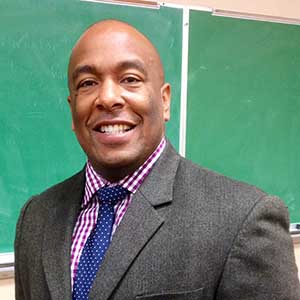
Christopher Freeburg, Conrad Humanities Scholar and Professor of English, University of Illinois

Related Blogs

  • Baldwin and Racial Justice

    February 12, 2018

Related Resources

Books:

  • Baldwin, James (1955). Notes of a Native Son.
  • Baldwin, James (1963). The Five Next Time.
  • Elam, Michele (2015). The Cambridge Companion to James Baldwin.

Web Resources:

  • Beard, Lisa. “‘Flesh of their flesh, bone of their bone’: James Baldwin’s Racial Politics of Boundness.” Contemporary Political Theory. 
  • Butorac, Sean. “Hannah Arendt, James Baldwin, and the Politics of Love.” Political Research Quarterly.  

Get Philosophy Talk

Radio

Sunday at 11am (Pacific) on KALW 91.7 FM, San Francisco, and rebroadcast on many other stations nationwide

Podcast

Full episode downloads via Apple Music and abbreviated episodes (Philosophy Talk Starters) via Apple PodcastsSpotify, and Stitcher